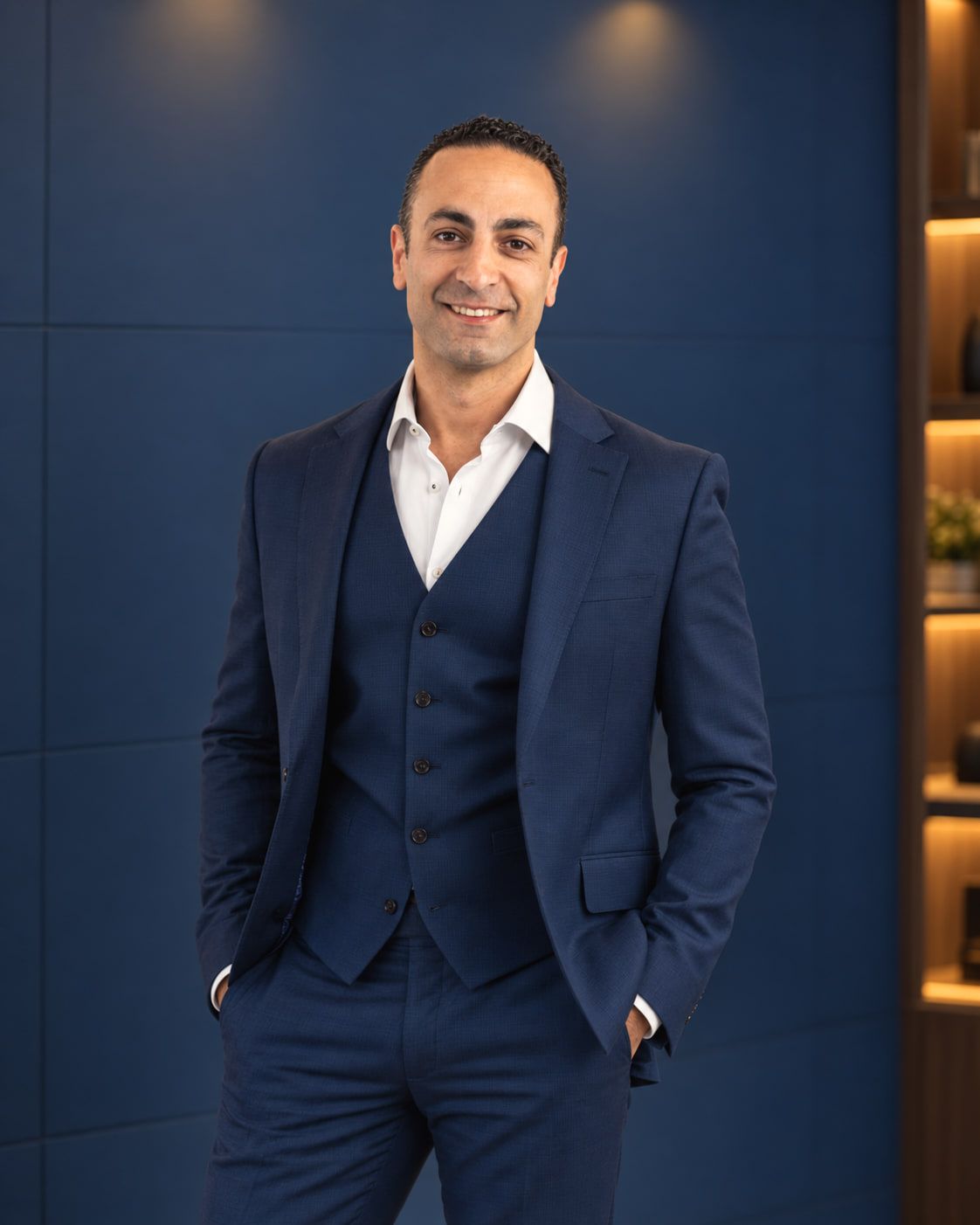
My practice
I lead the BSGE-accredited Endometriosis Centre at Epsom and St Helier University Hospitals NHS Trust. I treat endometriosis at every stage, including deep disease affecting the bowel, bladder and ureters, and I operate alongside colorectal surgeons and a specialist endometriosis radiologist when a case calls for it. I also see women with adenomyosis, fibroids, pelvic pain, heavy or painful periods, prolapse, premenstrual syndrome and menopausal symptoms, including advice on HRT.
Most of my operating is robotic (da Vinci) or laparoscopic. Both are forms of keyhole surgery carried out through small incisions, which for most women means less pain and a quicker return to normal life than open surgery. Since 2013, more than 99% of my abdominal operations have been keyhole rather than open, and my conversion rate from keyhole to open surgery has been around 0.1%. I have performed more than 2,000 keyhole operations, both laparoscopic and robotic, and now carry out on average more than 120 robotic operations a year (about these figures). I also train surgeons in robotic and laparoscopic surgery, and I am a da Vinci proctor.
Many women come to me after being told that their operation can only be done through a large open incision, or that their fibroids or endometriosis are too extensive to operate on. Complex cases of this kind are a large part of my practice, and I am often able to offer a keyhole or robotic operation instead.
I have a particular interest in conditions of the womb that affect fertility and pregnancy, including Asherman's syndrome (scar tissue inside the womb), caesarean scar niche (isthmocele), uterine septum, fibroids and polyps. I have been repairing caesarean scar niches since 2013, and I carry out more than 150 hysteroscopic procedures a year, most of them as day cases.
How I practise
You will see me at every stage, from your first consultation to your review after surgery. At Parkside Hospital and the CRP Clinic I can perform an ultrasound scan during your consultation, so that we can usually discuss the findings at the same visit. I will explain what I have found, set out every reasonable option, including the option of no surgery, and give you my recommendation, leaving the decision with you. You will receive a detailed letter, usually emailed within 30 minutes of your appointment, and full written information well before any operation.
Consultations are available in English or Arabic, and by video or telephone if you live further away or abroad.
Roles
- Consultant gynaecologist, Epsom and St Helier University Hospitals NHS Trust (part of the St George's, Epsom and St Helier hospital group), where I lead the BSGE-accredited Endometriosis Centre.
- Honorary consultant, King's Fertility.
- Consultant, Centre for Reproductive Immunology and Pregnancy (CRP Clinic), Epsom, looking after women whose miscarriages may be linked to a structural problem of the womb.
- da Vinci proctor for Intuitive Surgical (a paid role), supervising surgeons as they begin robotic surgery. I also train surgeons in laparoscopic surgery.
Teaching
I am currently a da Vinci proctor, supervising other surgeons as they begin to operate with the robotic system, and I train surgeons in both robotic and laparoscopic surgery. Intuitive Surgical, which makes the da Vinci system, pays me for my work as a proctor. In the past I have been on the faculty of the Royal College of Surgeons, the Royal College of Obstetricians and Gynaecologists, the Minimal Access Therapy Training Unit (MATTU) and the Advanced Life Support Group, and I was an examiner for the MSc at the University of Surrey.
Qualifications, training and career
- BSc (Hons), St George's Hospital Medical School, 2002
- MBBS, St George's Hospital Medical School, 2003
- MRCOG (Member of the Royal College of Obstetricians and Gynaecologists), 2009
- Consultant since 2013
- GMC registration number 6075583
I trained in specialist centres across London and the South East, including St George's, King's College Hospital, the Royal Marsden and the Royal Surrey County Hospital in Guildford, where I completed a fellowship in minimally invasive surgery in 2012. I became a consultant in 2013 at Epsom and St Helier University Hospitals NHS Trust, now part of the St George's, Epsom and St Helier University Hospitals and Health Group. There I have been lead for gynaecology, clinical director and divisional medical director, and I now lead the BSGE-accredited Endometriosis Centre.
Research and publications
I have published more than 40 peer-reviewed papers, including randomised controlled trials, as well as a book chapter, and received an international award from the AAGL for my research in endometriosis. My research interests are surgical outcomes in endometriosis (severe rectovaginal and bowel disease, diagnostic delay and predictors of response to surgery), outcome measures in chronic pelvic pain, minimally invasive surgical technique and training, including robotics, reproductive surgery (caesarean scar niche and Asherman's syndrome), and artificial intelligence in gynaecological surgery.
Key publications
- Shehata H, Elfituri A, Doumouchtsis SK, Zini ME, Ali A, Jan H, et al. FIGO Good Practice Recommendations on the use of progesterone in the management of recurrent first-trimester miscarriage. Int J Gynaecol Obstet. 2023;161 Suppl 1:3-16. DOI: 10.1002/ijgo.14717 (opens in a new tab)
- Shehata H, Ali A, Silva-Edge M, Haroon S, Elfituri A, Viswanatha R, Jan H, Akolekar R. Thrombophilia screening in women with recurrent first trimester miscarriage: is it time to stop testing? A cohort study and systematic review of the literature. BMJ Open. 2022;12(7):e059519. DOI: 10.1136/bmjopen-2021-059519 (opens in a new tab)
- Ghai V, Subramanian V, Jan H, Doumouchtsis SK. A systematic review highlighting poor quality of evidence for content validity of quality of life instruments in female chronic pelvic pain. J Clin Epidemiol. 2022;149:1-11. DOI: 10.1016/j.jclinepi.2022.04.016 (opens in a new tab)
- Ghai V, Subramanian V, Jan H, Pergialiotis V, Thakar R, Doumouchtsis SK. A systematic review on reported outcomes and outcome measures in female idiopathic chronic pelvic pain for the development of a core outcome set. BJOG. 2021;128(4):628-634. DOI: 10.1111/1471-0528.16412 (opens in a new tab)
- Ghai V, Jan H, Shakir F, Haines P, Kent A. Diagnostic delay for superficial and deep endometriosis in the United Kingdom. J Obstet Gynaecol. 2020;40(1):83-89. DOI: 10.1080/01443615.2019.1603217 (opens in a new tab)
- Ghai V, Jan H, Shakir F, Kent A. Identifying preoperative factors associated with nonresponders in women undergoing comprehensive surgical treatment for endometriosis. J Minim Invasive Gynecol. 2020;27(1):141-147. DOI: 10.1016/j.jmig.2019.03.007 (opens in a new tab)
- Kent A, Shakir F, Rockall T, Haines P, Pearson C, Rae-Mitchell W, Jan H. Laparoscopic surgery for severe rectovaginal endometriosis compromising the bowel: a prospective cohort study. J Minim Invasive Gynecol. 2016;23(4):526-534. DOI: 10.1016/j.jmig.2015.12.006 (opens in a new tab)
- Shakir F, Jan H, Kent A. 3D straight-stick laparoscopy versus 3D robotics for task performance in novice surgeons: a randomised crossover trial. Surg Endosc. 2016;30(12):5380-5387. DOI: 10.1007/s00464-016-4893-y (opens in a new tab)
- Kent A, Liversedge N, Dobbins B, McWhinnie D, Jan H. A prospective, randomized, controlled, double-masked, multi-center clinical trial of medical adhesives for the closure of laparoscopic incisions. J Minim Invasive Gynecol. 2014;21(2):252-258. DOI: 10.1016/j.jmig.2013.10.003 (opens in a new tab)
- Kent A, Shakir F, Jan H. Demonstration of laparoscopic resection of uterine sacculation (niche) with uterine reconstruction. J Minim Invasive Gynecol. 2014;21(3):327. DOI: 10.1016/j.jmig.2013.10.013 (opens in a new tab)
These are ten of more than 40 papers. A fuller list is on my ResearchGate profile (opens in a new tab).
Awards
- Carlo Romanini Award for best abstract on endometriosis, AAGL, Vancouver, 2014
- Best oral presentation prize, BSGE, 2014
- Best oral presentation prize, British Society of Gynaecological Imaging, 2012
- Best video presentation prize, BSGE, 2012
Memberships
- British Society for Gynaecological Endoscopy (BSGE)
- American Association of Gynecologic Laparoscopists (AAGL)
About these figures
The figures on this website come from my own surgical logbook, as at October 2026.
- Keyhole operations: more than 2,000 laparoscopic and robotic operations that I have performed.
- Robotic operations: on average more than 120 a year.
- Hysteroscopic procedures: on average more than 150 a year.
- Keyhole rather than open: since 2013, more than 99% of my abdominal operations have been carried out by keyhole surgery. Hysteroscopies, which are carried out through the cervix, are not counted.
- Conversion to open surgery: since 2013, two keyhole operations out of more than 2,000 have been converted to open surgery, a rate of around 0.1%. Converting is a safety decision, taken when finishing an operation by keyhole would not be safe.
These figures describe my practice as a whole. They are not a prediction for any one operation: I will explain the risks that apply to you before you decide.
Outside medicine
I am a keen sportsman, playing padel, boxing, running and skiing, and a keen photographer.